Crochet Patterns for Beginners: Read, Choose & Make Your First Project
Learn how to read crochet patterns, decode US stitch abbreviations, choose beginner projects, and make a simple cotton washcloth with step-by-step instructions.
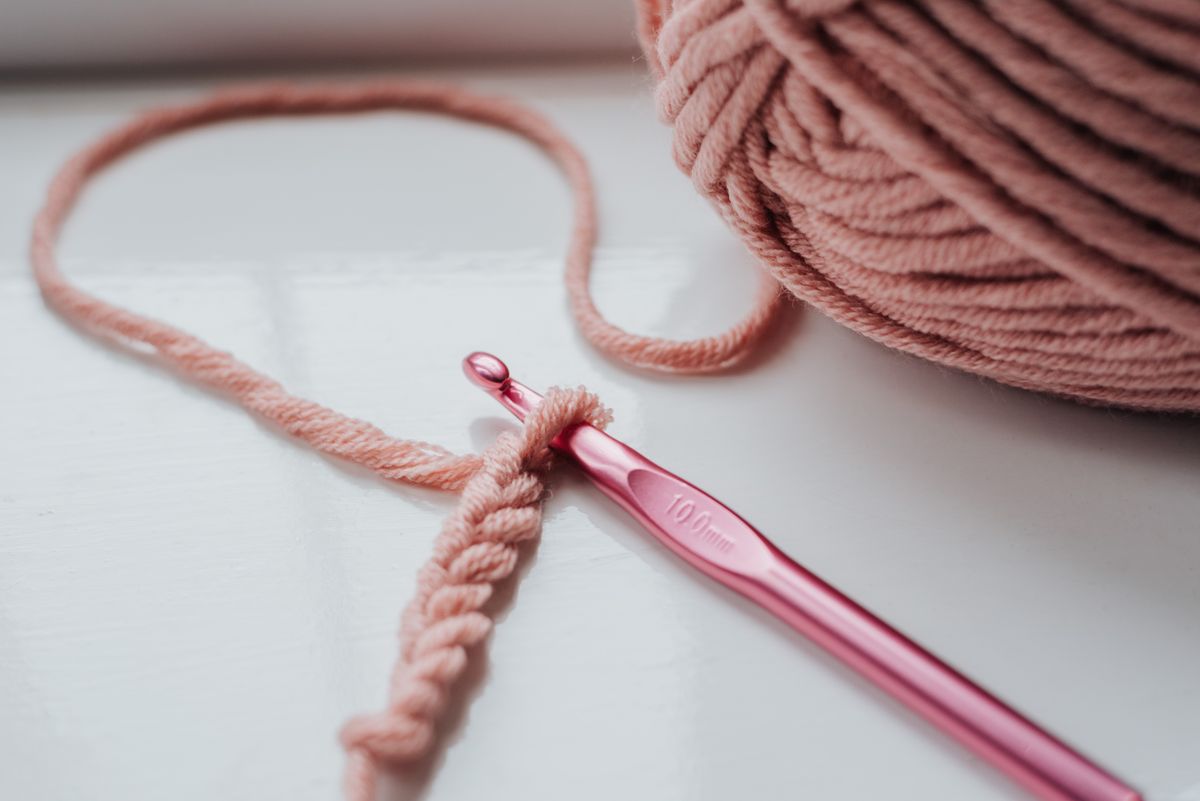
Crochet patterns are recipes for handmade projects: they tell you which materials to gather, which stitches to work, and how to turn those stitches into something you will love using. For a new crocheter, the abbreviations and numbers can look intimidating. This beginner-friendly guide explains every essential part, walks through a real line of instructions, and gives you a small, achievable project to try.
All stitch names in this article use US crochet terminology unless otherwise noted.
What Is a Crochet Pattern?
A crochet pattern is a series of instructions for making an object with yarn and a crochet hook. It may describe a scarf worked in rows, a hat worked in rounds, a collection of granny squares, or an amigurumi toy built from shaped pieces.
Most patterns explain the finished size, yarn and hook recommendations, gauge, abbreviations, and a sequence of rows or rounds. Some also include photographs or charts. You do not have to understand every advanced technique before starting: choose a pattern that uses stitches you already know, and build your skills from there.
Choose a Pattern You Can Actually Finish
Your first pattern should feel achievable. A small rectangular project is usually easier than a fitted garment or a shaped toy. Look for an explicit beginner skill level, one yarn color, short repeats, and a clear stitch count at the end of each row.
- Good first projects: a cotton washcloth, a simple scarf, a basic headband, or a single-color granny square.
- Save for later: highly fitted sweaters, fine lace, multi-part toys with complex shaping, and intricate colorwork.
- Before committing, check whether the pattern uses US or UK stitch terminology, whether you understand the hook size, and whether the listed materials are available.
Do not choose a pattern solely because its finished photograph looks beautiful. A well-written beginner pattern makes every row understandable.
Gather the Right Yarn and Tools
For practicing stitches, smooth, light-colored medium-weight yarn is easier to see than fluffy or very dark yarn. Read the yarn label for its recommended hook range. For a first project, you will also want scissors, a tapestry needle for weaving in ends, and one or two removable stitch markers.
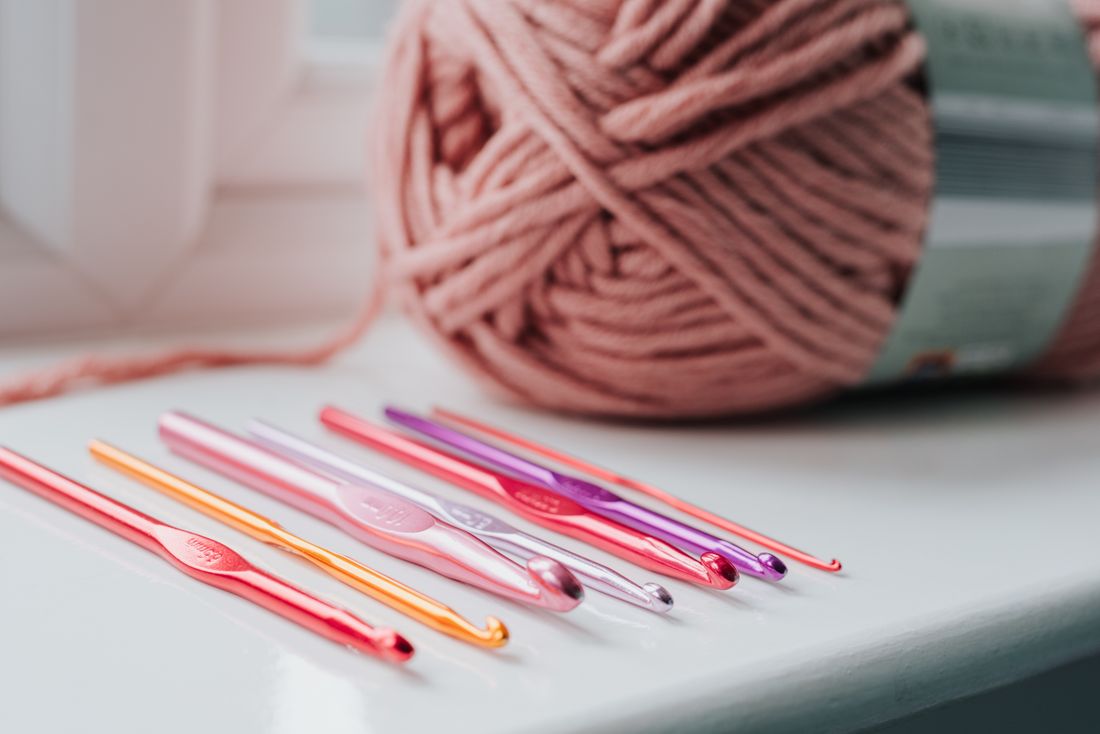
For a cotton washcloth, use machine-washable cotton yarn and a hook suited to its label. If the first swatch feels stiff, try a slightly larger hook; if the gaps are much bigger than you want, try a slightly smaller one. Your natural tension matters as much as the printed hook recommendation.
Learn the Most Common Crochet Abbreviations
Crochet instructions often use short forms to save space. These are the US abbreviations you will encounter most often:
- ch — chain.
- st / sts — stitch / stitches.
- sl st — slip stitch.
- sc — single crochet.
- hdc — half double crochet.
- dc — double crochet.
- tr — treble crochet.
- rep — repeat.
- inc — increase, often two stitches into one stitch.
- dec — decrease, joining stitches to reduce the total.
- sp — space, such as a chain space.
- RS / WS — right side / wrong side of the work.
Not every designer uses exactly the same shorthand. The abbreviations and special-stitches sections at the beginning of a pattern always take priority.
Understand US and UK Crochet Terms
US and UK terminology can use the same stitch names for different movements. For example, US single crochet is called UK double crochet; US double crochet is called UK treble crochet. A pattern that says "dc" may therefore mean different things depending on its terminology.
Before working the first row, look for a label such as "US terms" or "UK terms." If the designer has not specified one, check their stitch definitions rather than guessing.
Decode a Real Crochet Pattern Line
Consider this beginner instruction:
Row 1: Ch 21. Sc in the second ch from the hook and in each remaining ch. (20 sc)
It means:
- Make 21 chain stitches.
- Skip the chain immediately next to your hook.
- Insert your hook into the second chain and complete one single crochet.
- Work one single crochet into each of the remaining chains.
- Count your completed row: you should have 20 single crochet stitches.
The number in parentheses is the expected stitch count. It is not an extra instruction to make 20 more stitches.
Read Repeats, Brackets, and Turning Instructions
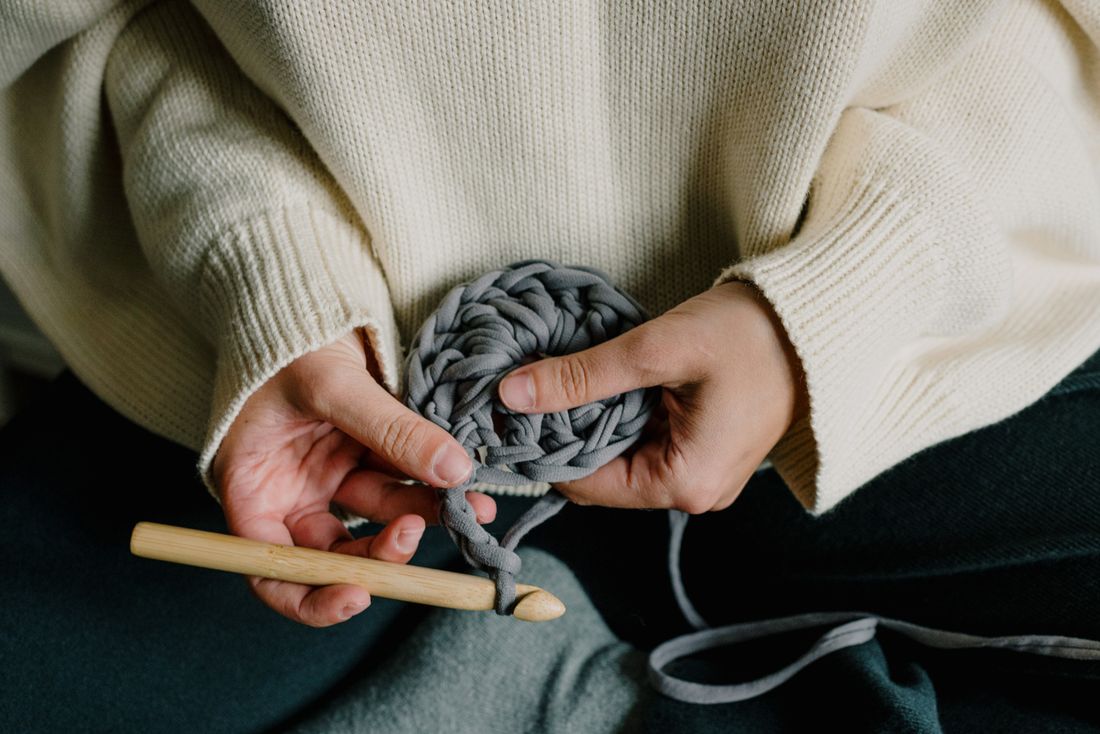
A pattern may say "(sc, ch 1) 5 times." That means work one single crochet and one chain, then repeat that pair until you have completed it five times. Square brackets or asterisks may also mark repeats; use the designer's pattern notes to see exactly which stitches are repeated.
Rows often finish with "turn." Turning simply means turning your work so you can stitch back across. A turning chain gives you height for the next row, but whether it counts as the first stitch depends on the specific instructions. Never assume all patterns count turning chains the same way.
If you crochet in rounds, check whether each round is joined with a slip stitch or worked continuously in a spiral. A stitch marker helps track the beginning of a continuous round.
A Free Beginner Crochet Pattern: Simple Cotton Washcloth
This small project puts the abbreviations into practice. It uses one stitch, has no shaping, and is easy to customize.
Skill level: Absolute beginner.
Terminology: US.
You will need: Approximately 50–75 g of smooth, worsted-weight cotton yarn, a 5 mm crochet hook (or the size recommended on your yarn label), scissors, and a tapestry needle. Exact yarn usage depends on your gauge and desired size.
Finished size: Variable. Work until the piece is roughly square; the dimensions depend on yarn and tension.
Special note: The chain-1 turning chain does not count as a stitch in this specific pattern.
Foundation: Ch 26.
Row 1: Sc in the second chain from the hook and in every remaining chain. (25 sc)
Row 2: Ch 1, turn. Sc into the first sc and every sc across. (25 sc)
Rows 3 onward: Repeat Row 2, counting 25 stitches at the end of each row, until the fabric is approximately square.
Finishing: Cut the yarn, pull the tail through the final loop, and use a tapestry needle to weave in the ends. Gently wash or dampen the washcloth and lay it flat to dry according to your yarn's care instructions.
If your edges begin to narrow, count every row and check that you have not skipped the first or last stitch. If they widen, you may be accidentally stitching into the turning chain. Consistent counting matters more than speed.
What Does Gauge Mean?
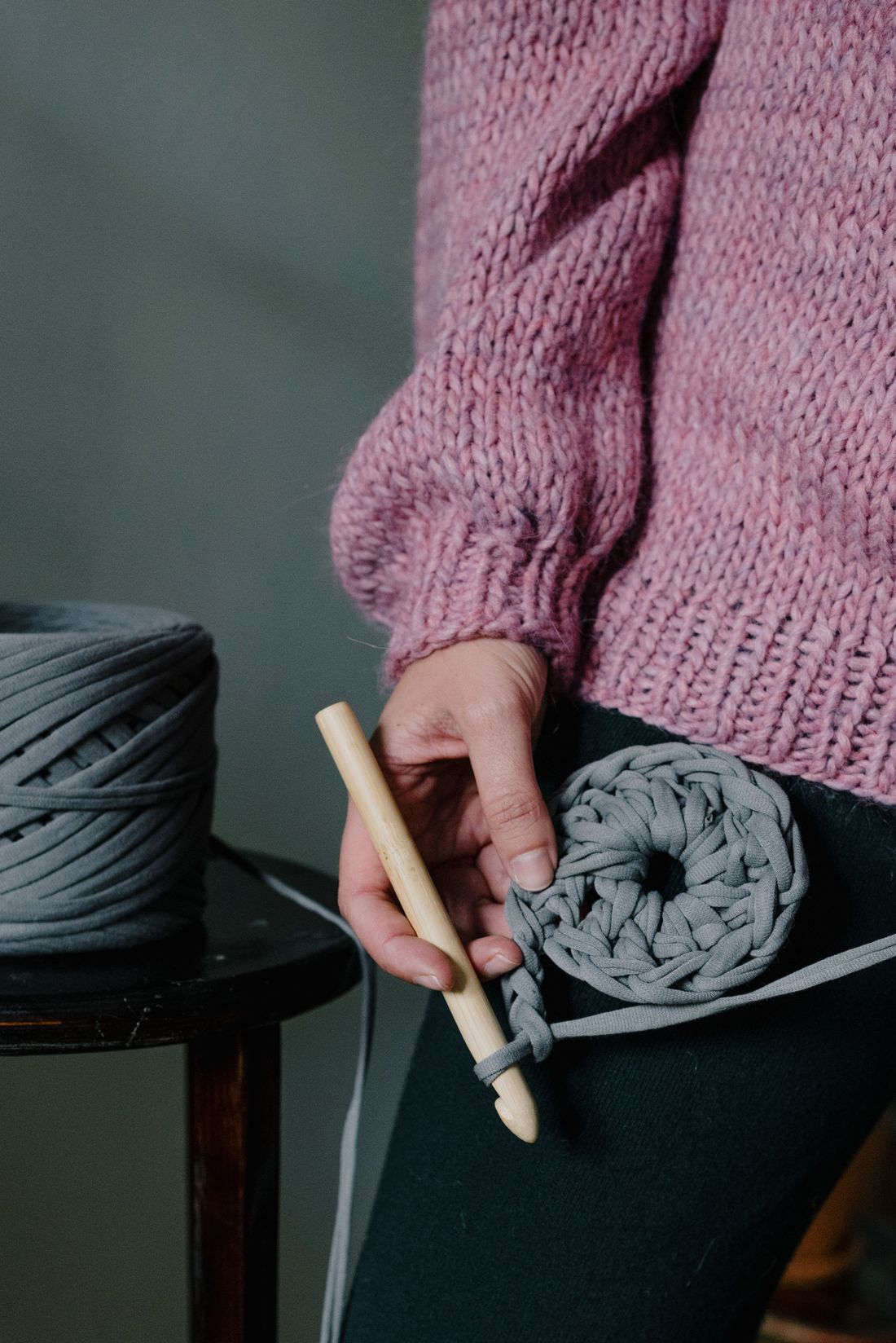
Gauge measures the number of stitches and rows within a specified distance, often 4 inches or 10 cm. Designers use it to predict the finished dimensions. If you crochet more tightly than the designer, your project may come out smaller; looser stitches may produce a larger result.
For the adjustable washcloth above, gauge is not critical. For a sweater, hat, or other fitted project, making a gauge swatch is essential. Use the yarn and hook you plan to work with, measure the central part of the swatch, and adjust the hook if needed. Read whether the designer measures gauge before or after washing.
Six Mistakes Beginners Can Avoid
- Starting with the wrong terminology. Confirm US versus UK terms before beginning.
- Skipping the materials list. Yarn weight and hook size can dramatically affect size and drape.
- Forgetting to count. Compare your row totals with the numbers in parentheses.
- Treating every turning chain as a stitch. Follow the pattern's specific instructions.
- Missing a repeat. Mark each completed repeat or row on paper or in a notes app.
- Rushing through unfamiliar instructions. Try a few stitches on scrap yarn before working them into your project.
A useful habit is to read one row completely, make that row, count it, and only then continue.
Written Instructions or Crochet Charts?
Written patterns describe the stitches with words and abbreviations. Charts use graphic symbols to show where stitches are placed. Neither format is inherently better: the most helpful one is the one you can read reliably.
Beginners often prefer written instructions for their first few projects. Later, a chart can make repeated motifs and lace patterns much easier to visualize. When both are provided, use them together to check your progress.
How to Tell Whether a Pattern Is Well Written
Look for a clear materials list, the terminology system, helpful stitch abbreviations, a starting stitch count, consistent row or round totals, finishing instructions, and photographs showing the intended result. Garments should also provide sizing and gauge information.
Even an excellent pattern cannot predict every crocheter's tension. Treat measurements as targets you can verify, rather than promises that every yarn substitution will produce the same result.
Frequently Asked Questions
What is the easiest crochet pattern for a complete beginner?
A flat square or rectangle using single crochet is one of the simplest choices. It helps you practice chains, consistent tension, turning, and counting without shaping.
What does "rep" mean in a crochet pattern?
It means "repeat." Follow the specific stitches or group of stitches indicated by the designer for the stated number of times.
Why do I end up with too many or too few stitches?
Common causes include skipping the last stitch, adding a stitch into the turning chain, or missing a decrease or increase. Count each row and use stitch markers to locate edge stitches.
Can I substitute a different yarn?
Often yes, but differences in yarn weight, texture, and fiber content can change your gauge, drape, and finished size. Always check gauge when size matters.
Do I need to memorize every abbreviation?
No. Keep a simple reference list beside your project. Repetition will make the most common abbreviations familiar naturally.
Your Next Step
Pick a smooth yarn, work the first few rows of the washcloth pattern, and check that you have 25 stitches every time. Once a simple rectangle feels comfortable, try a granny square, a longer scarf, or an easy pattern with one new stitch. Crochet patterns become easier through small, repeatable successes.
Photo credits: Anete Lusina and Ksenia Chernaya / Pexels. Photos illustrate tools and crochet techniques; individual stitches in the photos may differ from those in the instructions.
Keep Creating
Explore more crochet articles and patterns at CozyLoops.
Browse all articlesAnalytics preferences
You can disable optional analytics for this browser at any time.